A Banking Circle Executive Point of View — Point Zero Forum 2026, Zurich

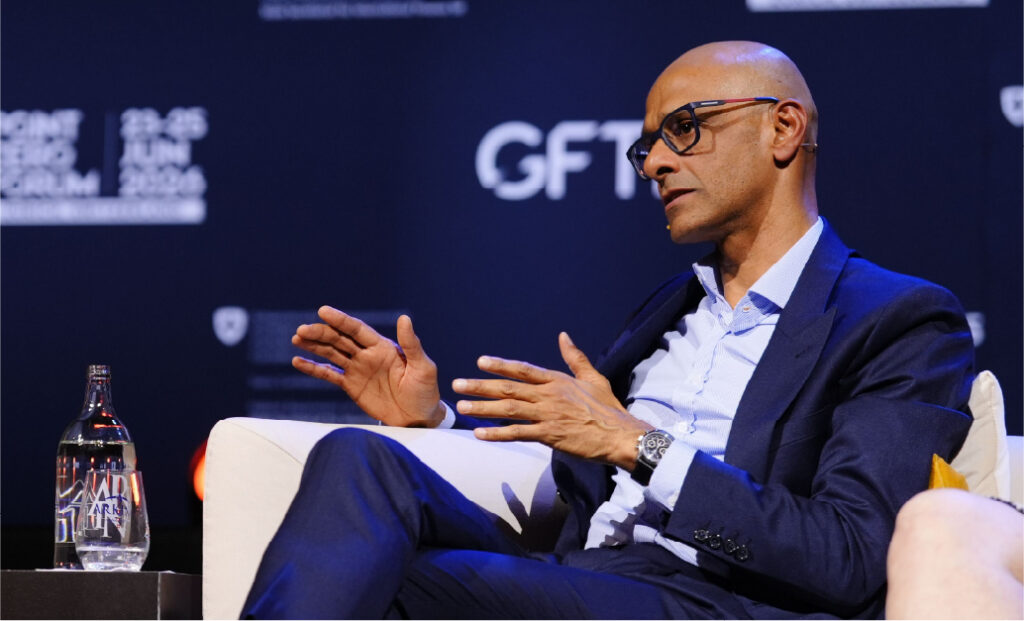
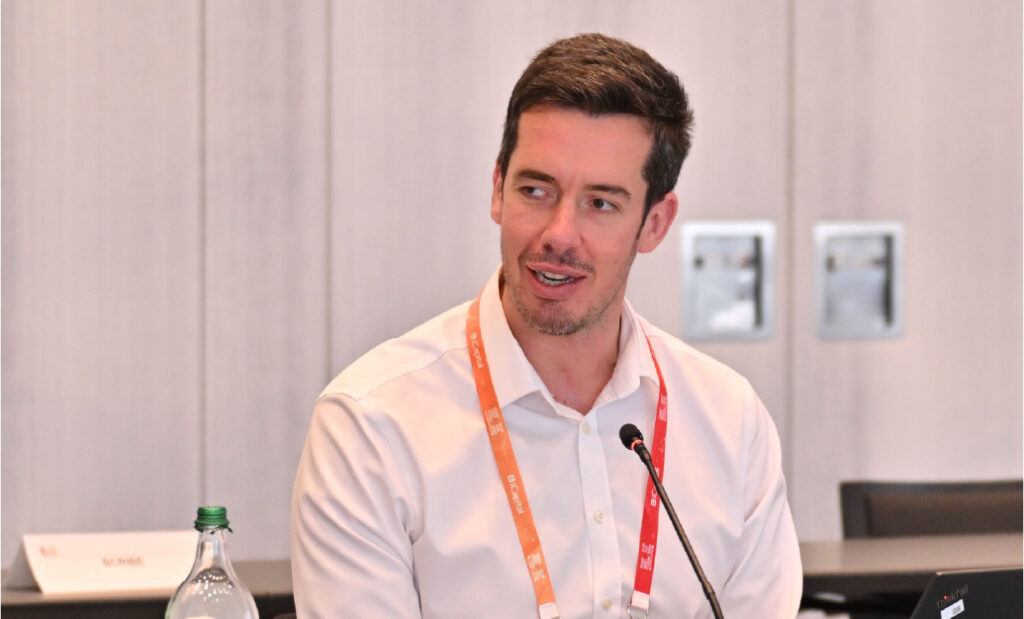
Point Zero Forum is where regulators and the people building financial infrastructure sit in the same room and argue about the same problem. This year in Zurich, the argument had a sharper edge. Tokenisation, stablecoins and on-chain settlement have stopped being conference abstractions – they are live engineering and policy questions, and the institutions that move first will set the terms for everyone else. The technology is no longer the hard part. Doing it within the rules and at scale, across a fragmented regulatory map, under supervision, at a standard a bank can put its name on – is. Banking Circle was active across the Forum, from the main stage to closed-door supervision roundtables. Four themes stood out.
01 CROSS-BORDER PAYMENTS: NO ONE RAIL WINS, SO BUILD ACROSS ALL OF THEM
No single rail is going to win cross-border payments, and the institutions that succeed will stop waiting for one to. The global payments system is being rebuilt across every layer at once – instant rails, ISO 20022, central bank digital currencies, stablecoins and B2B clearing are all live, each pulling slightly differently.
This is managed fragmentation: the rails work today, but they are being rebuilt mid-flight, and no one is waiting for consensus.
On the Forum Stage, in a discussion of how $320 trillion moves each year, Mikkel Grønlykke, President of Banking Circle, made the case alongside Swift, Visa, PayPal and GCash that the winners will operate across the fragments while showing the client one simple surface. The line-up itself made the point: global messaging, card networks, a consumer wallet and a remittance player on one stage, none of them able to fix cross-border payments alone.

“When you move money, the front end is judged on speed, predictability and safety. But the value is built on the back end – the connection into central banks, the licences, the resilience. That is the part the customer never sees, and it is the part that takes years.” — Mikkel Grønlykke, President, Banking Circle
Remittance is the clearest illustration of where cross-border payments still fail. On the panel, GCash – serving tens of millions of customers across the Philippines and the remittance corridors that feed it, put the problem plainly: moving a billion dollars between continents is straightforward, but moving a hundred to a family is not, because foreign-exchange spreads and per-hop charges erode a meaningful share of a worker’s livelihood. This is exactly the gap Banking Circle’s infrastructure is built to close. By holding funds at central banks, connecting into local clearing and settling in real time, the cost of the small payment collapses towards the cost of the large one. For any wallet operating at GCash’s scale, that is the difference between a viable cross-border product and an unviable one.
02 TOKENISATION: WE ARE AT THE BEGINNING OF A PROFOUND TRANSFORMATION
On-chain real world asset tokenisation has moved from experimental to a genuine structural shift. Some of the largest global financial instutitutions are building real financial use cases powered by public blockchains.
Kirit Bhatia, Chief Digital Assets Officer at Banking Circle, has watched both sides of this from the inside, having built tokenised settlement at scale before joining the bank. His observation is that the market is still very much in the early innings relative to the size of traditional markets but the structural change is accelerating. Tokenised MMFs, government bonds and treasuries are transforming capital markets, treasury management and yield optimisation. More assets are being issued on chain, and both TradFi and DeFi players are collaborating to bring a growing numbers of use cases to life.
“Tokenising assets is now the easy part. The challenge now is to build the liquidity, regulatory and interoperable architecture needed to power the trillions in value on chain 24/7. The task is not insignificant but the change is happening now.” — Kirit Bhatia, Chief Digital Assets Officer, Banking Circle
That the same panel brought together a regulated bank, J.P. Morgan and Ripple is itself the signal: tokenised settlement has moved from proof-of-concept to a shared infrastructure question, where the unresolved issues are interoperability between networks and the connection back into regulated money. The adoption logic follows from there. Every project begins with why. Why put this asset on-chain? For tokenised money and money market funds the answer is now plain: round-the-clock settlement, instant mobility, and cash that earns yield until the moment it is needed rather than sitting idle over a weekend. Once enough liquid assets are on-chain, the question inverts to why not, and the asset that cannot move on the new rails becomes the exception. Banking Circle’s role is the connective layer of a regulated infrastructure – tokenised funds, stablecoins and fiat reachable through one controlled workflow, so value can actually move rather than sit stranded on a single chain.
03 STABLECOINS: THE CASE FOR A BANK-GRADE BACKBONE
Making a tokenised asset useful is one problem. Making the money behind it sound is the other, and that is where stablecoins move from settled debate to unsettled structure.
Transaction volume crossed roughly $33 trillion in 2025 and, by early 2026, monthly volumes had overtaken ACH for the first time. The question now is how digital money integrates with fiat at scale, under supervision. That is harder than it looks, because a stablecoin is only as sound as the structure behind it, and most of the market is built on e-money vehicles, not banks. The distinction is not cosmetic. It decides what happens to a holder’s money if the issuer fails, how reserves are held, and whether on-chain money can be used with the legal certainty, operational controls and governance required in regulated financial markets.
The ecosystem makes the layers visible: an issuer like Paxos, an institutional network like Canton, and an asset manager like Franklin Templeton each handle a piece. But the layer that determines trust is the one that anchors it as a regulated bank. Aymeric Salley, who leads Banking Circle’s Digital Assets Platform, set out an approach that runs against the grain of how most banks have entered the space.
“We want clients to transact a stablecoin as they would any other currency — one integration, one experience — even though its legal and regulatory characteristics may be different underneath. The unique proposition: this sits inside a bank, not a fintech, so the bank-grade controls that protect their fiat protect their digital assets too.” — Aymeric Salley, Head of Digital Assets Platform, Banking Circle
The difference is where the capability sits. Banking Circle built its digital-asset capability inside the bank, under a single banking licence, governed by the bank’s own risk and control framework rather than in a separate entity alongside it. Its euro stablecoin is issued within the bank’s regulated operating environment, with reserves segregated, bankruptcy-remote and held in trust; the same structure lets institutional clients treat tokenised deposits as real money rather than a claim on a fintech.
For the client, the benefit is mundane and that is the point: fiat and digital assets reached through one connection, a stablecoin handled like any other currency. Banking Circle moves over €1.5 trillion a year for more than 850 institutional clients across 28 currencies, four of them stablecoins – which means digital assets are governed by infrastructure already proven at scale, not a parallel stack built to chase the trend.
04 FINANCIAL CRIME: AML FOR TOKENISED ASSETS HAS TO BE BUILT FOR THE CHAIN
If tokenisation is the opportunity, financial crime is the challenge waiting at the bridge. Blockchain has opened a new attack surface – bridge exploits, mixers, cross-chain layering that outpaces the tools regulators, and financial institutions, were given. The structural question that ran through the Forum’s compliance and supervision sessions: are the anti-money-laundering frameworks inherited from fiat finance even capable of governing a system where settlement is atomic, pseudonymous and borderless by design? Patrick Green, Chief Compliance Officer at Banking Circle, has a clear view, shaped by two decades in financial crime across correspondent banking and now digital assets.
“We are moving from a correspondent banking world of intermediary risk to one of network risk. For decades, financial crime professionals and regulators alike have sought more data regarding the source and destination of funds. That day has arrived and firms need to be ready to utilise it in a way that strengthens resiliency and risk management or risk replicating the high cost of compliance seen in the traditional finance space.” — Patrick Green, Chief Compliance Officer, Banking Circle
Compliance has shifted from “are we ready?” to “are we positioned?” The most effective compliance functions no longer sit at the end of the process approving decisions; they sit at the front, shaping product and market-entry choices before complexity becomes cost — a posture that matters more, not less, where a control gap is an instant, irreversible loss. MiCA, the EU AML Regulation and the new AMLA, DORA, PSD3 and the US GENIUS Act all signal one direction: supervisors converging on a higher standard of institutional understanding, not merely compliance, whilst also diverging on some of the fundamental roles and responsibilities of stablecoin issuers; who is responsible and accountable for the risks presented? The days of being responsible only for the direct relationship and two hops on seem to be disappearing in the rear-view mirror.
No institution can simply port fiat-era controls onto the chain. What a regulated bank brings is the obligation, and the capability, to redesign them, and the regulatory relationships to do it credibly. That investment is made once at the infrastructure layer and absorbed for every client, which is what lets compliance scale with the opportunity rather than cap it. The opportunity to use some of the lessons learned in correspondent banking, intelligence sharing and transparency of data, presents financial institutions, digital asset firms, regulators and law enforcement alike with the ability to use a data-led network that protects the end user without compromising on user experience.
WHAT WE SHOULD EXPLORE FURTHER
Supervision will have to become more coordinated. A stablecoin can be globally fungible while the rules it meets change the moment it crosses a border – demanding dynamic reserve rebalancing and raising an open question: how should nationally-based supervisory models adapt as digital-asset markets become inherently cross-border?
Liquidity management has to be rethought for a 24/7 world. The correspondent-banking model was built on deferred settlement and net positions. Real-time gross settlement, around the clock, requires a fundamentally different approach to capital and reserves.
Interoperability is harder than the headlines suggest. The industry agrees on the destination and disagrees on what it takes to get there. Legal interoperability — not just technical message-passing — is the part most often underestimated.
LOOKING AHEAD
Real-time, always-on, multi-rail money movement — fiat and tokenised, domestic and cross-border, regulated end to end — is becoming the baseline, not the differentiator. What separates the leaders from those who spend five years catching up is infrastructure built ahead of demand.
That is the work Banking Circle has done quietly for over a decade: the licences, local clearing access and resilient architecture, and now a digital-asset capability built within the bank’s regulated operating environment and governed by its control and risk framework. The technology question is largely answered. The advantage now belongs to whoever can operate it lawfully, at scale, across a fragmenting world — and make the complexity disappear for the client.
To continue the conversation, connect with Mikkel Grønlykke, Kirit Bhatia, Aymeric Salley and Patrick Green on LinkedIn.