
A Banking Circle Executive Point of View
Money20/20 Europe is the annual moment when the people actually building global payments infrastructure are in the same room. Agentic AI, stablecoin settlement, A2A rails, and regulatory fragmentation have stopped being horizon topics- they are live architecture problems, and the sessions reflected it. The focus is shifting towards how they can be scaled securely, efficiently, and globally.
Four themes stood out across the event:
01 THE INFRASTRUCTURE IMPERATIVE
The conversation running underneath almost every stage session was this: the payments industry built the last decade’s innovation on systems it cannot afford to keep running. You cannot bolt an agentic layer onto a batch-processing core and call it real-time.
“Many market players build modern user interfaces and digital services on top of existing systems, but this does not change the fact that the underlying infrastructure is still based on 1970s-era architecture. The structural limitations of the back-end systems will ultimately hinder innovation, scaling, and adaptation to new consumer needs.”
— Morten Lilleøre, COO
Michael Boel has spent over a decade at the centre of clearing infrastructure. Speaking on the Money20/20 floor:
“The whole availability and the whole stability is a big, big thing for us. We cannot have maintenance. There is no such thing anymore. It’s 24/7, 365.”
— Michael Boel, Co-Head of Clearing Technology
Banking Circle runs active-active infrastructure, to reduce concentration risk and single point of failure – holding client funds directly with central banks to remain ultra-liquid at all times and fully compliant. On the cross-border gap, Boel is equally direct:
“E-commerce and global logistics have become faster and more flexible than ever—you can order a shirt in Hong Kong and have it delivered overnight. But payments haven’t kept pace. The infrastructure is still complex, expensive, and riddled with intermediaries. For merchants, that means high costs and, too often, not even receiving the full amount.”
— Michael Boel, Co-Head of Clearing Technology
For treasurers and CTOs evaluating their payments infrastructure, the question is no longer whether to modernize, it is whether the partners they rely on have already done the foundational work: the licences and permissions, the local clearing connectivity, the 24/7 resilient operational architecture. That groundwork takes years and remains subject to jurisdiction-specific regulatory, scheme and operational requirements. It cannot be stood up in response to a client requirement.
02 A2A: EUROPE IS BETTING ON ITS OWN RAILS
Account-to-account payments were among the most prominent themes at this year’s show. Pan-European A2A schemes now reach tens of millions of users, e-commerce rollouts are live, and the February 2026 alliance linking Spain’s Bizum, Italy’s Bancomat, Portugal’s SIBS and Vipps MobilePay into a single interoperable network – 130 million users across 13 countries, signals that this is a structural reshaping of European payments, not a product cycle.
What that reshaping exposes is a gap that rail announcements tend to obscure. Moving money between accounts is only part of the challenge. The harder questions- how to hold balances across currencies, manage FX exposure, reconcile in real time, and meet local legal and regulatory requirements in each market remain unsolved for most institutions entering new corridors. Every market is the same, but a little bit different. Germany’s direct debits, the UK’s Faster Payments mix, iDEAL’s dominance in the Netherlands: each requires genuinely local infrastructure, careful assessment of licensing, conduct, safeguarding, consumer, operational resilience and scheme requirements.
“Ten years ago, when we started building the company, one of our key strategic decisions was to adopt a unified platform architecture rather than fragmented infrastructure by country or business line. It is a challenge because building such a system is more time-consuming and complex. However, in the long term it provides a major advantage, enabling much faster and more efficient scaling.”
— Morten Lilleøre, COO
The rail is the starting point. What sits around it -liquidity, FX, compliance, local account infrastructure is where the real complexity lives, and where the real competitive advantage will be built.
03 STABLECOINS: TWO RAILS, NOT ONE WINNER
Monthly stablecoin volumes overtook ACH for the first time in February 2026. Full year transaction volumes crossed $33 trillion in 2025. The existential debate is over. The question now is how digital asset rails sit alongside -and eventually integrate with traditional fiat rails.
The honest answer from Amsterdam: both are needed, and for the foreseeable future. Institutional stablecoin deployment is largely still running in controlled corridors. The settlement infrastructure, liquidity management and compliance architecture required to run stablecoin rails at scale, for regulated institutions, under regulatory scrutiny have reached the inflection point. The institutions best placed to lead the transition will be those that treat digital and fiat rails as complementary – building on regulated foundations rather than choosing between them.
Kirit Bhatia spent years at JPMorgan, RBS and Ripple before joining Banking Circle as Chief Digital Assets Officer. He was on stage at Money20/20 speaking to both sides of this tension:
“The next phase of finance will enable money and assets to move globally, instantly and securely. Our goal is to be the bank that powers that transition.”
— Kirit Bhatia, Chief Digital Assets Officer
In Banking Circle’s April 2026 announcement of its CASP licence and stablecoin settlement services, Bhatia made the architectural principle explicit:
“We have spent years building the financial infrastructure that enables more than 850 payment companies, financial institutions, and marketplaces to efficiently move and convert over €1.5 trillion annually across the globe.”
— Kirit Bhatia , Chief Digital Assets Officer
Stablecoins at Banking Circle are intended to integrate, where permitted, with existing regulated fiat infrastructure – payment, compliance controls and settlement within a single workflow. Interoperability between payment rails, providers and ecosystems will be essential to unlocking scale.
04 REGULATION: FRAGMENTING FASTER THAN INFRASTRUCTURE CAN FOLLOW
MiCA, the Instant Payments Regulation, DORA, PSD3- the regulatory agenda in European payments has rarely been more active, and the Policy20 sessions at Money20/20 reflected a regulator community genuinely shaping outcomes rather than reacting to them.
The challenge for CFOs and CTOs in the audience is not a lack of frameworks – it is their pace of change, and the lack of alignment across different jurisdictions. Compliance is not a cost to be managed. It is a structural constraint on product architecture, governance and operational resilience.
“When you move money, trust, security and compliance are the foundations. Being licensed by tier-one regulators proves you have met a very high bar, and that is essential for the institutions that rely on us.”
— Kirit Bhatia, Chief Digital Assets Officer
Banking Circle is regulated across Luxembourg, the UK, Australia, Singapore and a growing number of European and non-EU markets. The availability of products and services remains subject to the relevant entity, jurisdiction, licence or permission scope, and applicable local law. A branch, and subsidiaries are not a product – it is years of regulatory relationship and local scheme access that clients would otherwise have to replicate themselves.
For Banking Circle’s clients – regulated fintechs, PSPs and banks expanding into new markets, that complexity is absorbed at the infrastructure layer rather than duplicated by each entity. A single API connection, multiple jurisdictions. The institutions that try to solve every local compliance requirement individually will spend their product budget on regulatory engineering rather than client outcome
05 WHAT WE SHOULD EXPLORE FURTHER
Liquidity management deserves more airtime. As 24/7 instant clearing and stablecoin settlement become the norm, the treasury operating model has to change with them. The correspondent banking model was built on deferred settlement and net positions – real-time gross settlement requires a fundamentally different approach to capital and liquidity. It is a conversation the industry needs to have more openly.
Interoperability is harder than the headlines suggest. The consensus at the show was clear on the destination – less so on what it actually takes to achieve it. Even within SEPA, local scheme rules vary. Outside of it, the picture is considerably more complex. Common standards matter, but they do not substitute for the local licensing, connectivity and operational work that makes cross-border payments function lawfully and at a market level.
Access for mid-sized businesses remains an open question. The consolidation reshaping the payments industry is creating infrastructure of genuine scale and quality—but scale and accessibility do not always move together. The businesses that most need frictionless cross-border payments are not always the ones best positioned to demand it, and that gap is worth watching as the market continues to consolidate.
LOOKING AHEAD
Real-time, always-on, multi-rail money movement – fiat and digital, domestic and cross-border, regulated end to end – is the baseline expectation. What separates the institutions that lead from those that spend the next five years catching up is infrastructure built ahead of the demand, not in response to it.
Banking Circle’s mission, in Mikkel Grønlykke’s words, is to make global payments faster, simpler and more accessible. The complexity lives in the execution. That work has been underway for over a decade, and what Amsterdam confirmed is that the market has arrived at the destination we have been building towards.
“Banking Circle is the quiet engine behind the financial world. We’re the rails that help money move smoothly, safely, and instantly—often in the background. And that’s exactly how great infrastructure should work. It shouldn’t get in the way. It should empower businesses to grow, innovate, and reach new markets without even thinking about the complexity behind the scenes.”
— Mikkel Gronlykke, President Banking Circle
For more highlights from Money20/20 Europe, watch our video here. We look forward to continuing the conversation and sharing further insights as these trends evolve.
To continue the conversation get in touch on LinkedIn:
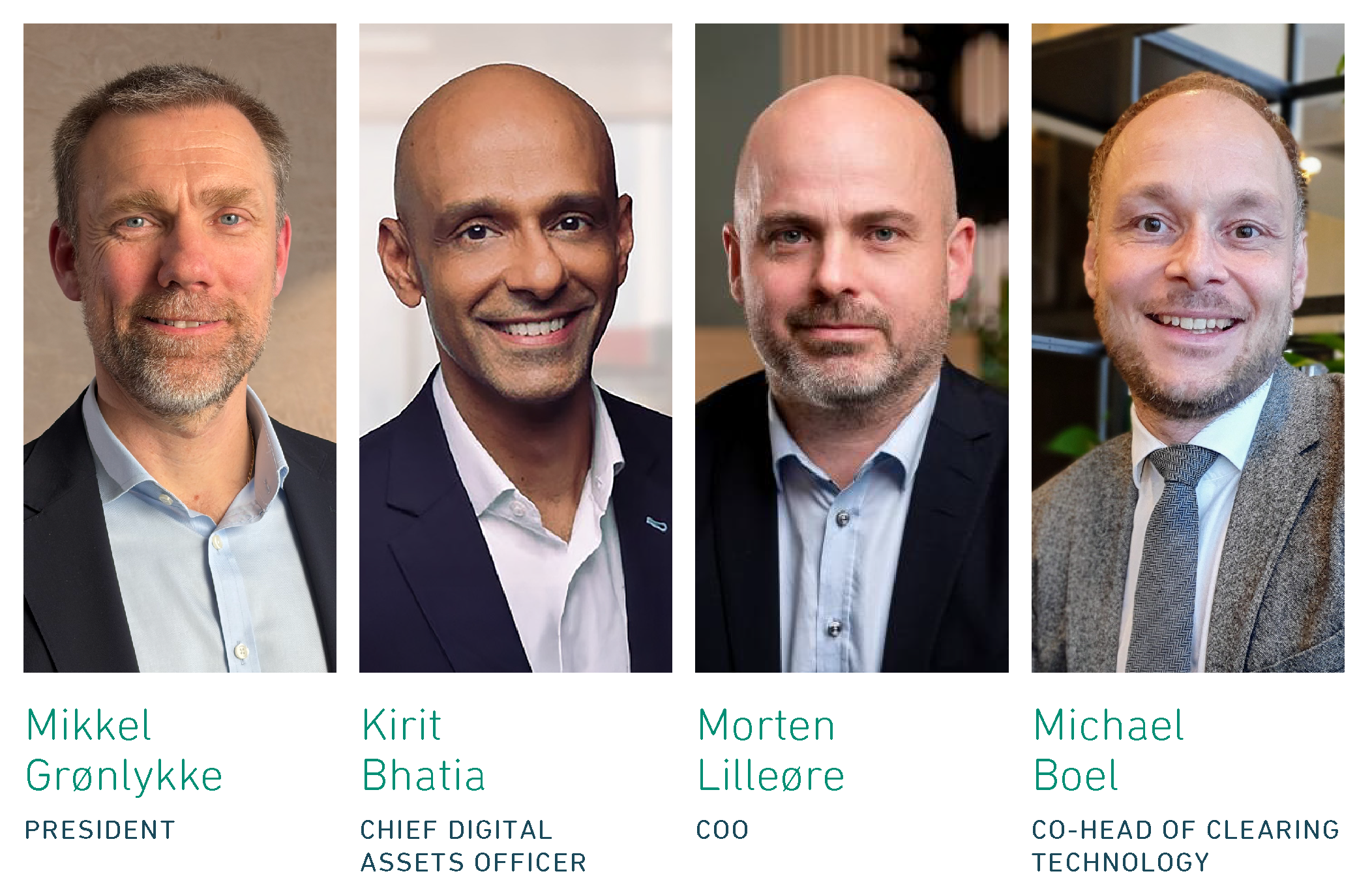
Mikkel Grønlykke | Kirit Bhatia | Morten Lilleøre | Michael Boel
